Capabilities for your protocol
DreamDoc is a turnkey real-world data layer for clinical and observational studies: continuous body signals with situational context, protocol-ready assessments, intervention tracking, managed devices, and analysis-ready exports — without building your own wearable stack.
What you get
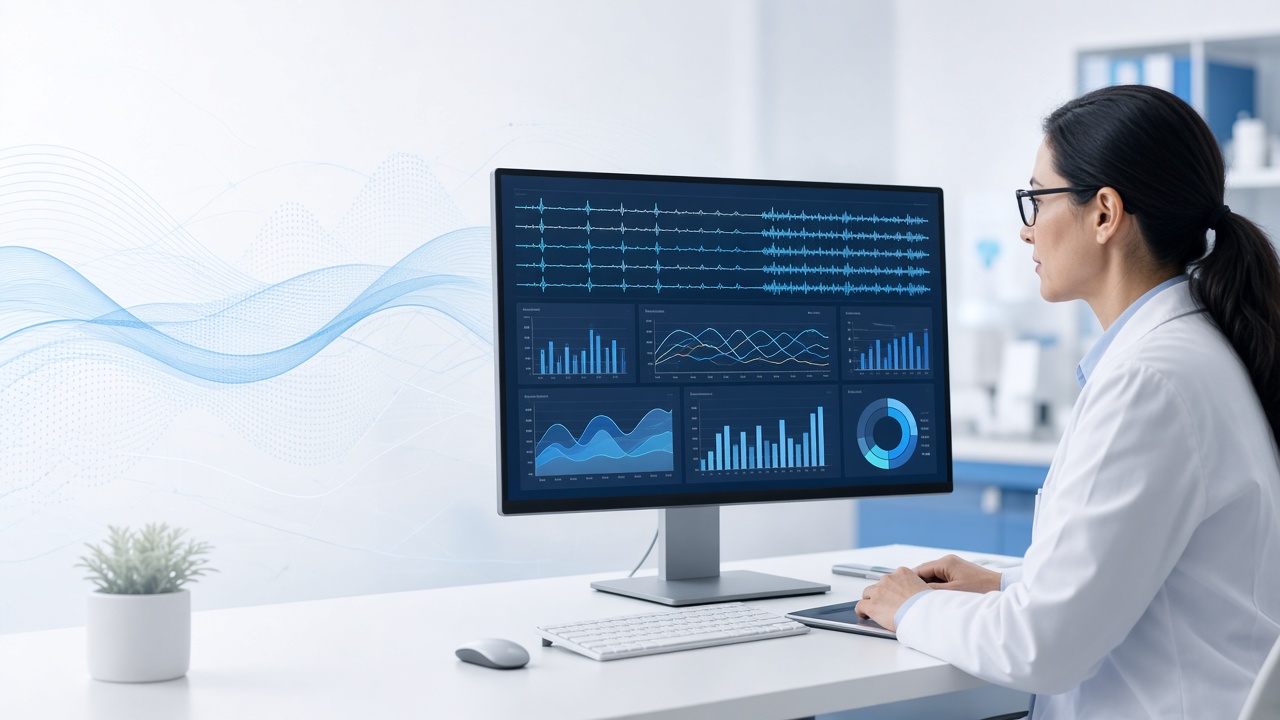
Most study teams need more than a consumer API dump. DreamDoc combines sensing, context, protocol tooling and operations so real-life data becomes usable evidence.
- Continuous sensing — high-resolution body data from wearables during everyday life, not only clinic visits.
- Context, not just curves — activity, environment and situational signals so physiology can be interpreted.
- Protocol building blocks — questionnaires, reaction-time tests, walking tests, situational HRV and more.
- Intervention tracking — medications, therapies, activities and meditations with structured detail.
- Device operations included — provisioning and management so you do not have to buy and run a fleet yourself.
- Analysis-ready output — per participant / day / week exports prepared for statistics workflows.
Data capture stack
Continuous body data with context
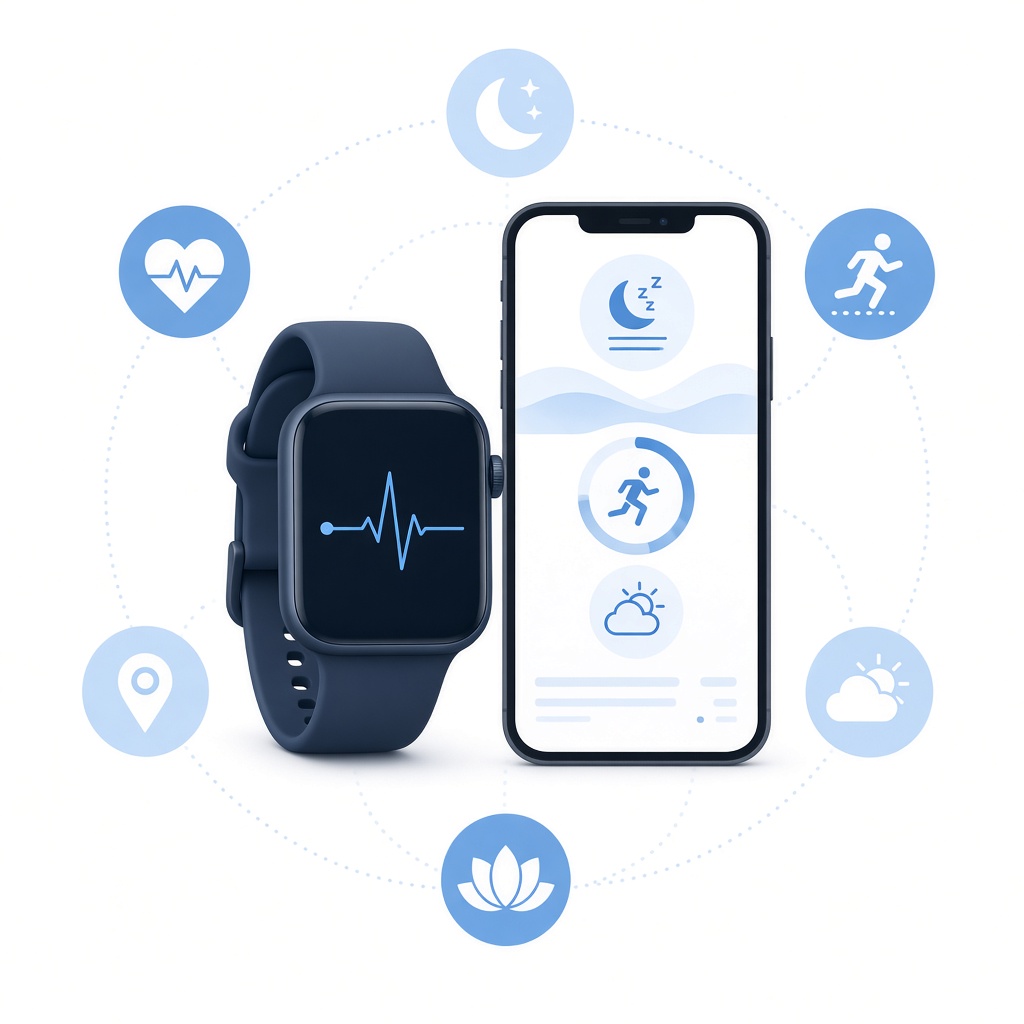
Core streams typically include heart-related signals, activity and sleep-related measures, complemented by situational information such as activity state, weather, temperature and environment. That context is what turns raw wearable traces into interpretable real-world evidence.
Additional clinical & lifestyle channels
Beyond the primary wearable stream, studies can collect supporting measures such as blood pressure, weight, CGM, stress and sleep-related parameters — so endpoints and covariates live in one coherent participant timeline.
Consumer wearables, research-grade workflow
Participants can use familiar devices (including Garmin-oriented DreamDoc experiences for baselines, HRV and reaction time). Your team receives structured study data rather than ad-hoc screenshots or siloed app exports. See also Your personal Health for the consumer-facing Garmin apps.
Protocol tools & interventions
Tests & assessments
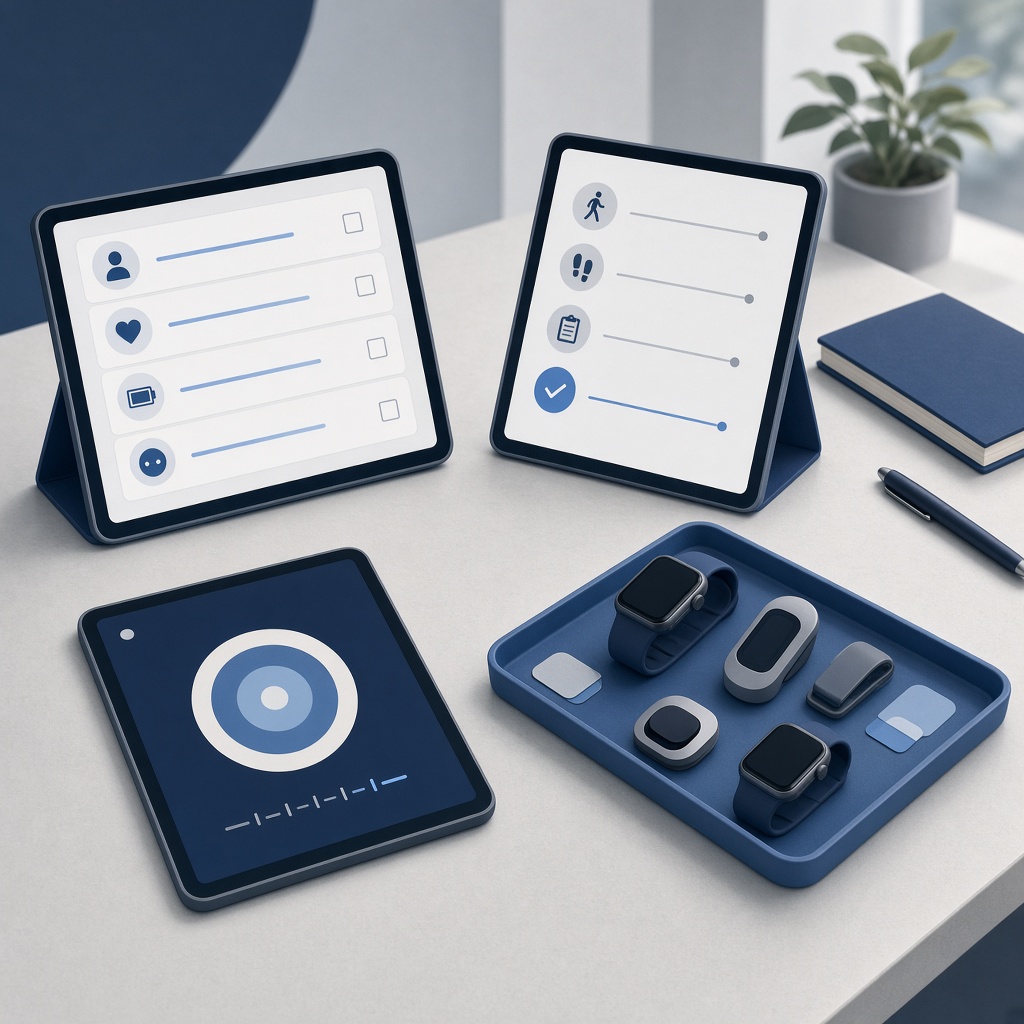
- Questionnaires and ePRO-style inputs
- Reaction-time testing
- 6-minute walking test and stairway walking tasks
- Situational HRV assessments
Intervention tracking
When your protocol includes treatments or behavioural interventions, DreamDoc can record medications, therapies, activities and meditations with the detail needed for adherence and exposure analysis — aligned to the same participant timeline as the sensor data.
Device management as a service
Hardware is often the hidden cost of wearable studies. DreamDoc can take over device management so investigators do not need to purchase, configure and support devices as a separate workstream — devices can be part of the service.
- Less logistics overhead for study sites
- More consistent device configuration across participants
- Faster start when scaling cohorts
Analytical output
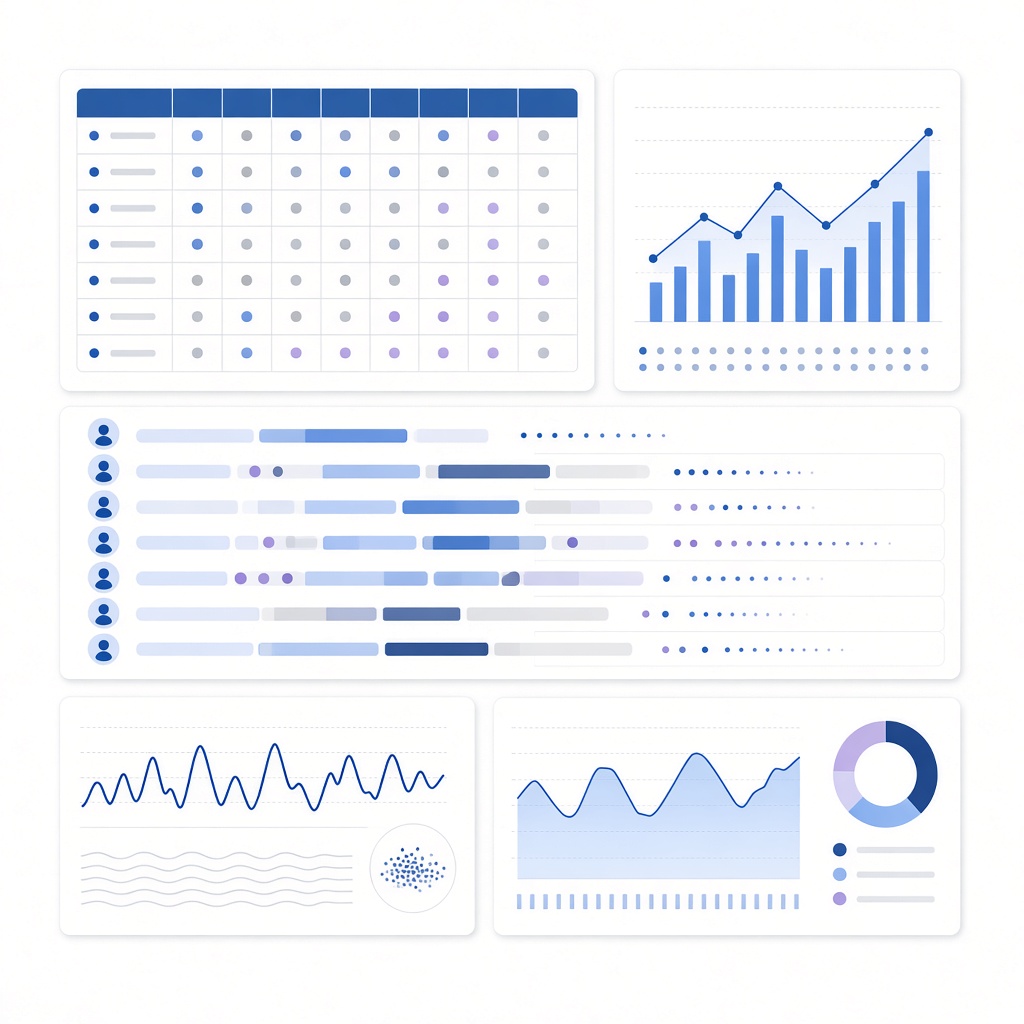
DreamDoc produces detailed analytical output per participant and per day or week, with recorded parameters structured for direct import into common statistics environments. That reduces manual cleaning between collection and analysis.
- Participant-level and period-level aggregations
- Parameter coverage aligned to what was actually recorded
- Formats intended for statistical programmes and study pipelines
Standards & study fit
Medical and partner programmes demand trustworthy handling of health data. DreamDoc is built for professional use with attention to integration into existing study workflows and high standards for data handling. For formal requirements and legal materials, use the site’s legals and privacy pages, or contact us for study-specific questions.
How teams typically engage
- Scope — endpoints, cohort size, duration, required sensors and assessments
- Configure — protocol modules, device plan, export schema
- Run — participants collect real-life data; DreamDoc handles device/ops layers as agreed
- Analyse — receive structured outputs for your biostatistics workflow
Next step
If this matches your study design, book a short demo or contact the team with protocol requirements. You can also return to the overview page for a shorter summary.